JS2SA / JB2XH
Original: Ryota / JJ1WTL — 500304565 · Original Japanese HTML
Published: 2023-08-09T20:13:00+09:00
English translation of the archived article text. The author’s first-person observations, uncertainty and later additions are preserved; this is not the research summary. Image contents are preserved as images, not silently incorporated into the translated prose.
In addition to the previously reported JS2RA and JS2RB, licences have been issued to two more experimental stations for digital fixed services in the HF band. Besides the one named in the title, the other station's callsign was unknown. [Added August 28] It is now disclosed: JS2SA.
[Added September 14, 2024] Please also see the follow-up, ‘The new JB2XH’:
https://jj1wtl.seesaa.net/article/504743515.html (English translation)
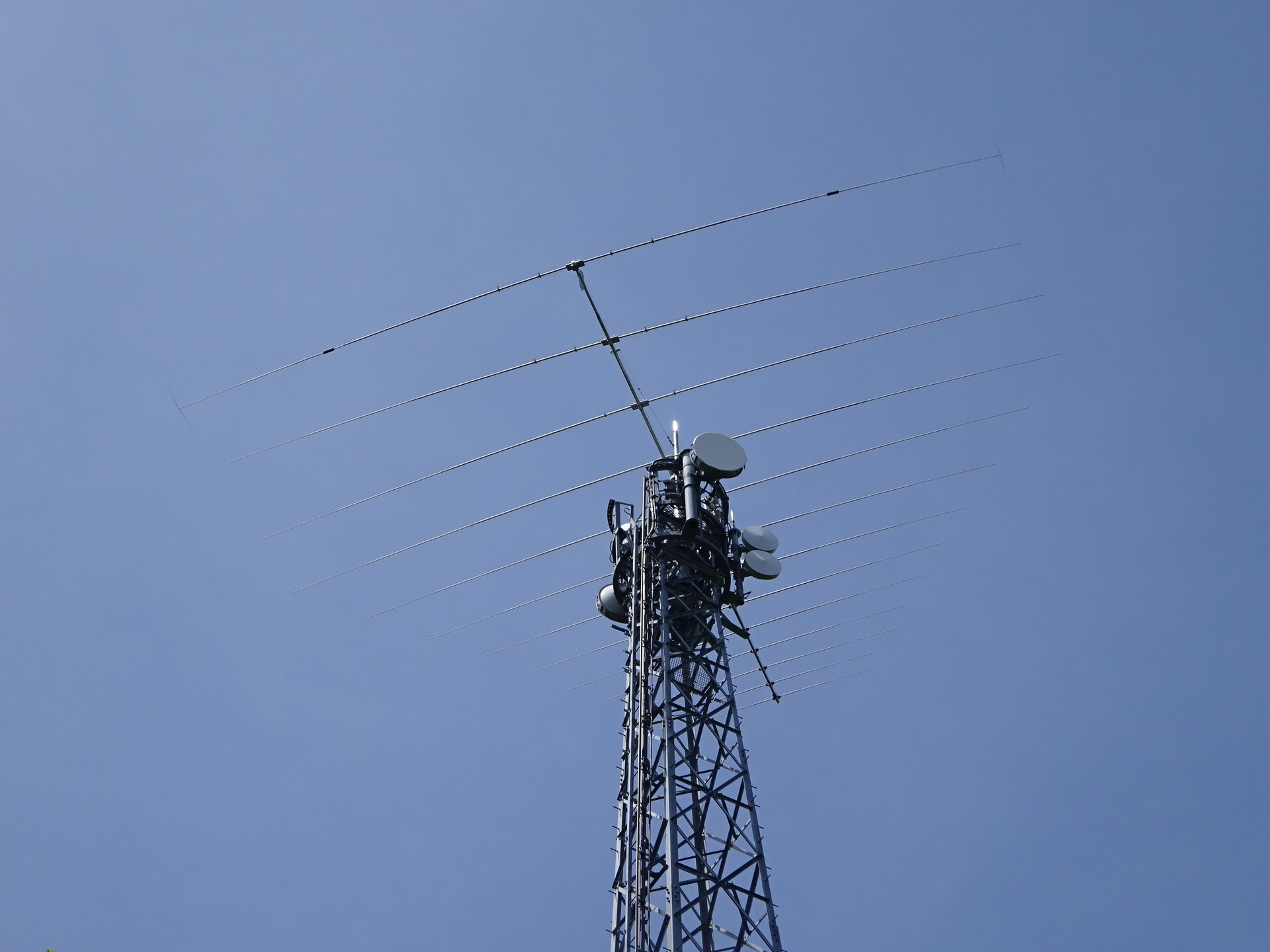
This must be the place!
From photographs taken while investigating microwave routes.
Both are in Minamiboso City.
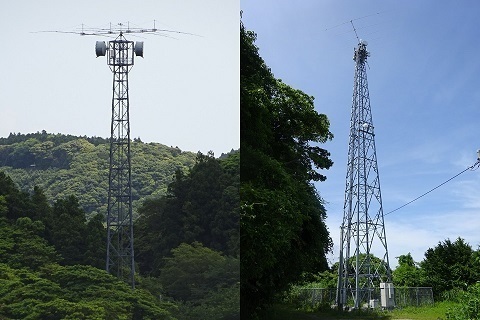
Callsign unknown JS2SA — 4HF
The left side of the photograph above.
Could it be this antenna piggybacking on JOSADA TELECOM's tower?
What follows is written on the basis of that assumption ↑.
SRI if I have got it wrong.
If you know another possible location, please contact the ‘I saw a suspicious HF antenna in Minamiboso City’ department.
It is the eastern of the two towers inside Cosmo Classic Club.
Google Maps satellite imagery also shows a beam antenna aligned northeast–southwest:
https://www.google.com/maps/@35.1114822,139.9555643,53m/data=!3m1!1e3
Click to enlarge (1.2 / 1.3 MB).
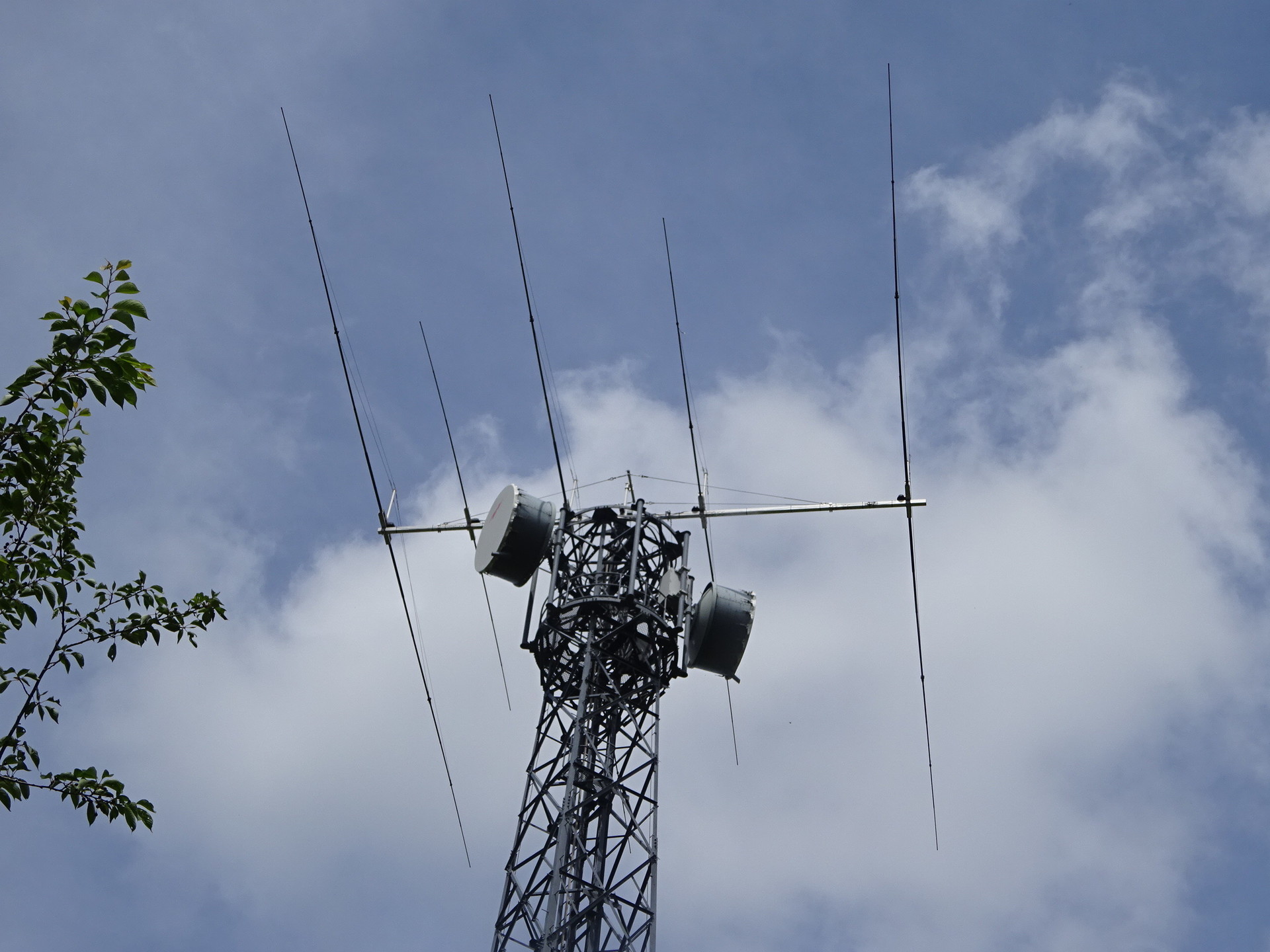
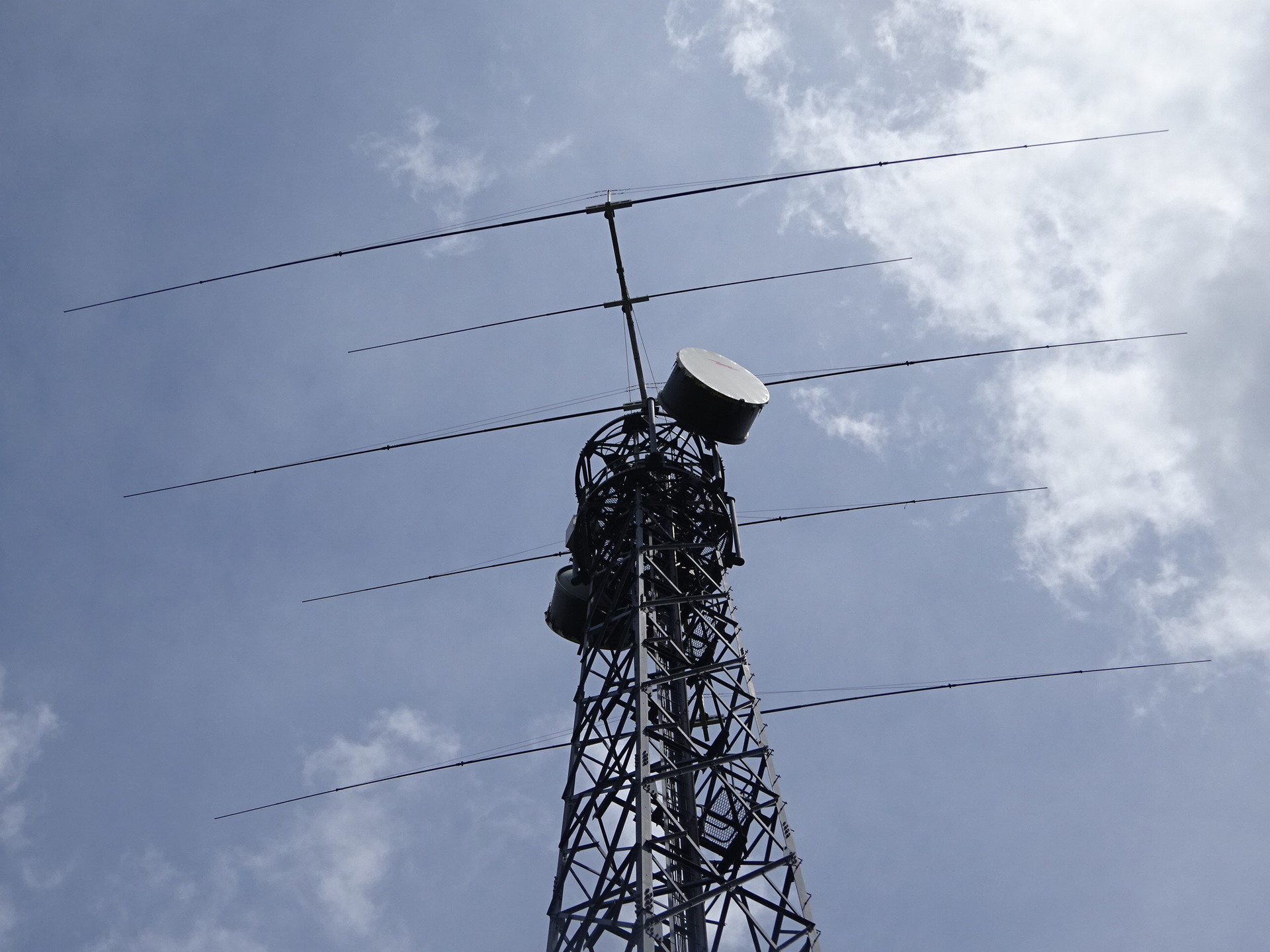
JB2XH — High Bar Communications (HBC)
The right side of the photograph at the beginning.
It is probably the company's Gotenyama station, with an HF antenna on top.
The HF antenna is not yet visible in Google Maps satellite imagery:
https://www.google.com/maps/@35.0819152,139.9447268,53m/data=!3m1!1e3
But when you visit the site… Click to enlarge (1.1 / 1.2 MB).
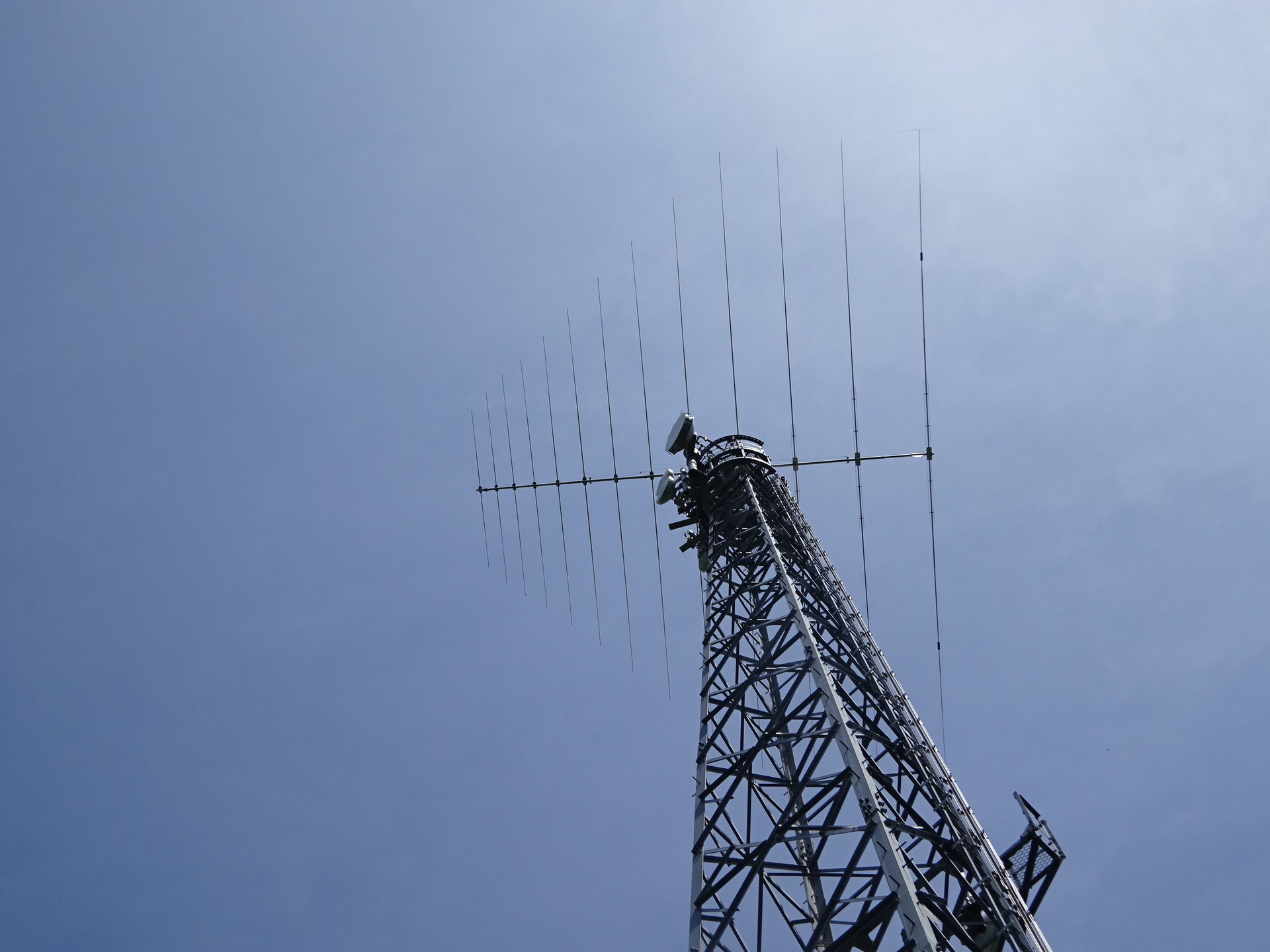
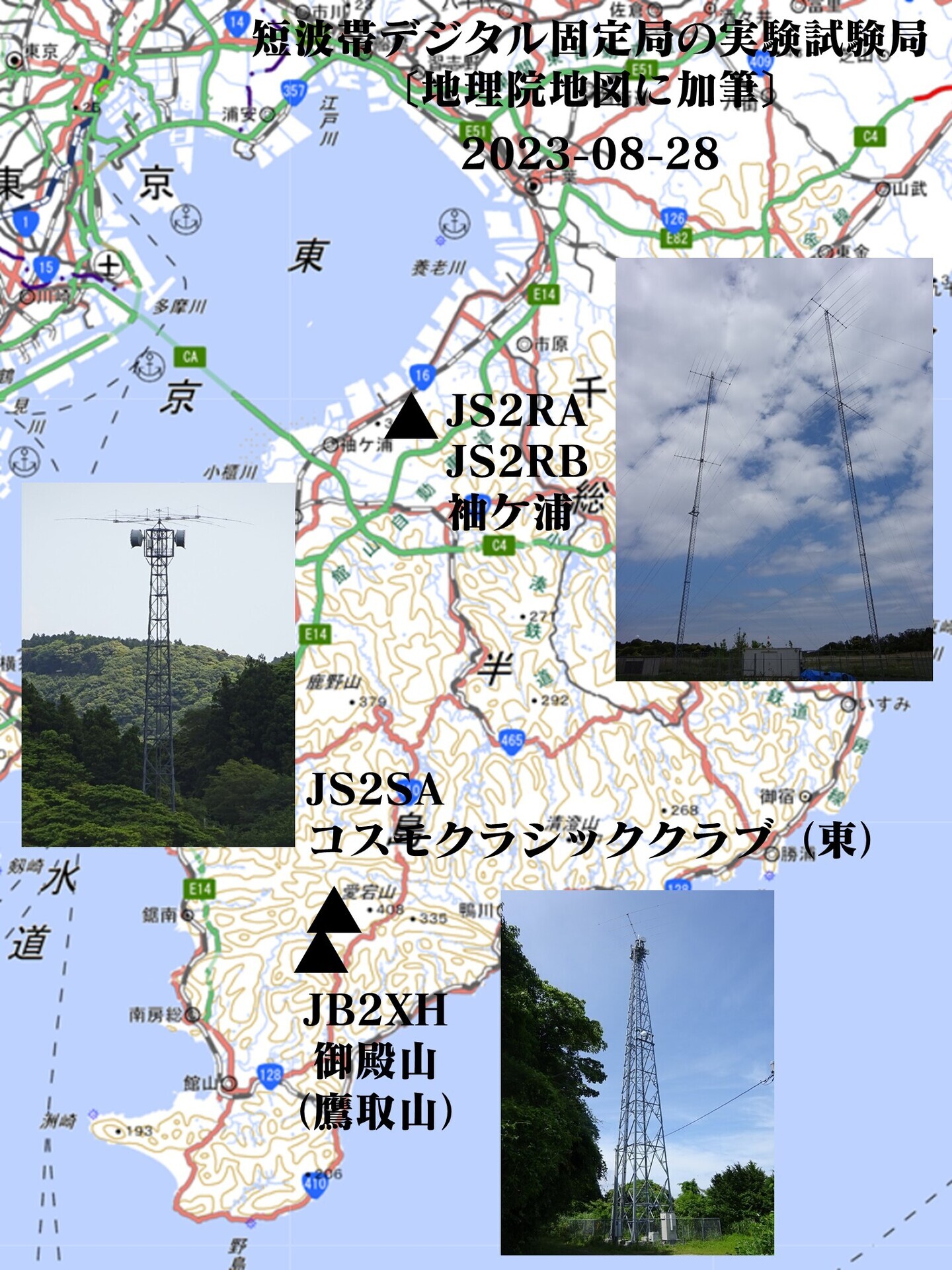
Locations, together
JS2RA / JS2RB (https://www.google.com/maps/@35.4465176,140.019764,53m/data=!3m1!1e3?entry=ttu) are included in this overview.
Click to enlarge (640 KB).
Comparison table
Here is a comparison including JS2RA and JS2RB.
Twelve frequencies in all.
| Field | JS2RA | JS2RB | JB2XH | |
|---|---|---|---|---|
| Operator | DATACOM COMMUNICATIONS | DATACOM COMMUNICATIONS | 4HF | High Bar Communications |
| Location | Kubota, Sodegaura City | Kubota, Sodegaura City | Cosmo Classic Club, Minamiboso City | Gotenyama (Takatoriyama), Minamiboso City |
| Licence issued | September 15, 2021 | January 25, 2023 | June 7, 2023 | July 28, 2023 |
| Licence valid until | December 31, 2023 | December 31, 2023 | December 31, 2023 | December 31, 2023 |
| Counterpart | Chicago, W (USA) | DU (Philippines) | Chicago, W (USA); Singapore; London, G (UK) | Johor Bahru, 9M (Malaysia) |
| Emission | — | — | 12K0A1D | — |
| Emission | 12K0D1D | 12K0D1D | 12K0D1D | — |
| Emission | — | — | — | 12K0F1D |
| Emission | 12K0G1D | 12K0G1D | 12K0G1D | 12K0G1D |
| Emission | — | — | 12K0K1D | — |
| Frequency (kHz) | 6864 | 6864 | — | — |
| Frequency (kHz) | 6900 | — | 6900 | 6900 |
| Frequency (kHz) | 9081 | 9081 | — | — |
| Frequency (kHz) | 9126 | — | 9126 | 9126 |
| Frequency (kHz) | 10845 | 10845 | — | — |
| Frequency (kHz) | 10953 | — | 10953 | 10953 |
| Frequency (kHz) | 12117 | 12117 | — | — |
| Frequency (kHz) | 12159 | — | 12159 | 12159 |
| Frequency (kHz) | 14673 | 14673 | — | — |
| Frequency (kHz) | 14736 | — | 14736 | 14736 |
| Frequency (kHz) | 16119 | 16119 | — | — |
| Frequency (kHz) | 16209 | — | 16209 | 16209 |
| Antenna power | 10 kW | 5 kW | 3 kW | 10 kW |
Links to the Radio Station Information Search
(1a) JS2RA
DATACOM SERVICES GK
To Chicago, W (USA)
https://www.tele.soumu.go.jp/musen/SearchServlet?pageID=4&IT=A&DFCD=0004295380&DD=1&styleNumber=21
(1b) JS2RB
DATACOM SERVICES GK
To DU (Philippines)
https://www.tele.soumu.go.jp/musen/SearchServlet?pageID=4&IT=A&DFCD=0004448132&DD=1&styleNumber=21
(2) ***** (identification signal withheld) JS2SA
4HF K.K.
https://www.tele.soumu.go.jp/musen/SearchServlet?pageID=4&IT=A&DFCD=0004464656&DD=1&styleNumber=21
(3) JB2XH
High Bar Communications GK
https://www.tele.soumu.go.jp/musen/SearchServlet?pageID=4&IT=A&DFCD=0004474981&DD=1&styleNumber=21
Other operators expressing interest
According to the ‘Draft Minutes of the First Meeting of the HF Digital Fixed Station Working Group, Land Radiocommunication Committee, Information and Communications Technology Subcommittee, Information and Communications Council’:
https://www.soumu.go.jp/main_content/000862432.pdf
That is the source.
(4) NuVo Networks
Already provides microwave services between cable landing stations and data centres in central Tokyo.
(5) GT Technologies Japan GK
Already provides microwave services between cable landing stations and data centres in central Tokyo.
(6) Sora Communications
The companies' capital relationships below (from registers, reporting and LinkedIn)
JOSADA TELECOM's parent, McKay Brothers International, describes itself precisely as ‘a proven provider of ultra-low-latency private wireless bandwidth and microwave market data.’
Sora Communications' parent, Tower Research Capital, describes itself precisely as ‘a trading and technology company that has built some of the fastest, most sophisticated electronic trading platforms in the world.’
In order of establishment.
| Operator | Parent / officers |
|---|---|
| JOSADA TELECOM K.K. | McKay Brothers International, SA https://www.mckay-brothers.com/ * * * Francois Tyc; James Considine; Julien Andre Wilk |
| NuVo Networks K.K. | DRW https://drw.com/ * * * Eric Belisle; Tom Proudley; Scott Andrew Smaller |
| GT Technologies Japan GK | GT Technologies APAC B.V. https://opencorporates.com/companies/nl/66202450 |
| DATACOM SERVICES GK | IMC Asia Pacific B.V. https://opencorporates.com/companies/nl/34248428 * * * Soichiro Sunohara; Johan Benning |
| 4HF K.K. | Raft Technologies * * * Carmel Rosenthal; Haim Ben-Ami; Yuval Rosen |
| High Bar Communications GK | New Line Networks LLC https://www.newlinenet.com/ |
| Sora Communications GK | Tower Research Capital LLC https://www.tower-research.com/ |
The fact that JOSADA TELECOM is a subsidiary of McKay Brothers International comes from the following press material, rather than the company register:
‘McKay Brothers provides ultra-low-latency microwave bandwidth for data transmission between Tokyo and Singapore’
https://kyodonewsprwire.jp/release/201611166323
‘Purposes’ from each company's register
| Operator | Registered purposes |
|---|---|
| JOSADA TELECOM K.K. | (1) Telecommunications services. (2) All business incidental to the preceding item. |
| NuVo Networks K.K. | 1. Telecommunications business under the Telecommunications Business Act. 2. Planning, creation, development, sale, installation and maintenance of telecommunications and related services, including: (1) acquiring spectrum, frequencies and telecommunications operating permits; (2) acquiring equipment for transmitting and receiving data; (3) leasing or purchasing facilities to house communications equipment; (4) entering business agreements concerning electronic communications infrastructure and those services. 3. All business incidental or related to the preceding items. |
| GT Technologies Japan GK | 1. Telecommunications business under the Telecommunications Business Act. 2. Acquisition, leasing, subleasing and use of real and personal property. 3. All business incidental or related to the preceding items. |
| DATACOM SERVICES GK | 1. Implementation of existing radio communications technologies. 2. Development of experimental radio communications technologies. 3. Acquisition and leasing of real and personal property necessary to carry out those purposes. 4. All business incidental or related to the preceding items. |
| 4HF K.K. | (1) Telecommunications business. (2) Market research, information collection, investigation and research concerning telecommunications markets and technologies, including commissioned work. (3) Construction of telecommunications and associated facilities, and contracting for that construction. (4) Development, maintenance, sale and leasing of telecommunications and associated facilities. (5) Import and export of communications equipment, electrical equipment, computers and related/peripheral equipment, software and systems. (6) Collection, processing and sale of information through communications systems. (7) All business incidental or related to the preceding items. |
| High Bar Communications GK | 1. Performing and managing logistics, operations, administrative management and value-added services for telecommunications operators. 2. Ownership, leasing and subleasing of real and personal property. 3. Telecommunications business. 4. All business incidental or related to the preceding items. |
| Sora Communications GK | 1. Development and testing of existing and experimental radio communications technologies. 2. Construction and operation of communications sites and networks. 3. Acquisition and retention of licences necessary for the preceding items. 4. Acquisition and leasing of real property and infrastructure necessary for the preceding items. 5. All business incidental or related to the preceding items. |
How JB and JS are distinguished
Experimental stations in Kanto
The treatment is:
-
Telecommunications operators: JB2XA–XZ, JB2WA–WZ and JB2ZA–ZZ.
-
Others: JS2RA–YZ.
That is how they are assigned [Identification Signal Assignment Standards].
Why ‘2’ even though this is Kanto?
To revisit an old point…
For experimental stations—including Japan's ‘experimental test stations’—the digits 1 and 0 cannot be used [RR, Radio Regulations].
Consequently, Kanto and Shinetsu both use ‘2’, unlike amateur stations.
Good examples are JG2XA and the former JG2AS.
Once commercial service arrives
This is looking ahead, but for ‘fixed stations’ operated by ‘telecommunications operators’,
the treatment of ‘digital’ here would be:
-
If treated as telegraphy: three letters beginning JA, followed by two digits.
-
If treated as telephony: the same pattern beginning JB.
And:
The third letter depends on the band:
-
4–6 MHz: JAA##–JAD##, JBA##–JBD##.
-
7–10 MHz: JAE##–JAK##, JBE##–JBK##.
-
11–15 MHz: JAL##–JAP##, JBL##–JBP##.
-
16–17 MHz: JAQ##–JAS##, JBQ##–JBS##.
-
18–24 MHz: JAT##–JAZ##, JBT##–JBZ##.
And:
The digits are:
-
First digit: order of use.
-
Second digit: ‘the operating frequency in MHz’.
That is the arrangement [Identification Signal Assignment Standards].
Thoughts
All of them are foreign-owned, aren't they?
Perhaps Japan's leading financial newspaper should have a go at Nagara too… (no, that's not it).
This requires a certain amount of bandwidth
Even at ‘12 kHz per company’, six companies would require 72 kHz in total.
Furthermore,
over six bands—6, 9, 10, 12, 14 and 16 MHz—that is 72 kHz × 6 = 432 kHz of bandwidth.
Earlier posts
‘JA2RA / JA2RB’
https://jj1wtl.seesaa.net/article/499204144.html (English translation)
‘JA/CB-004’ (visiting the 4HF and HBC stations)
https://jj1wtl.seesaa.net/article/499505940.html (English translation)