Kanozan / Kazusa Resort
35.253096, 139.963589 ↗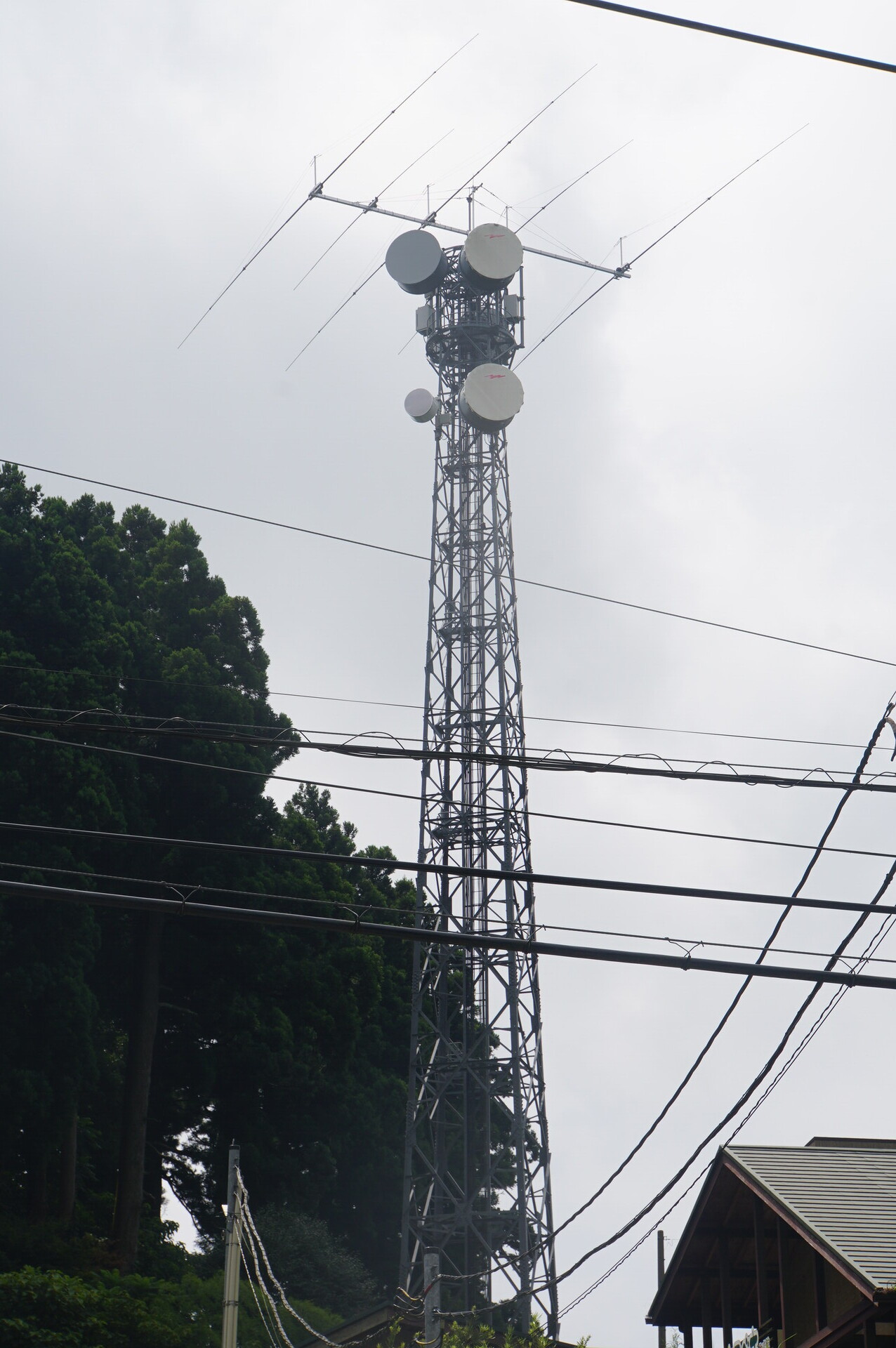
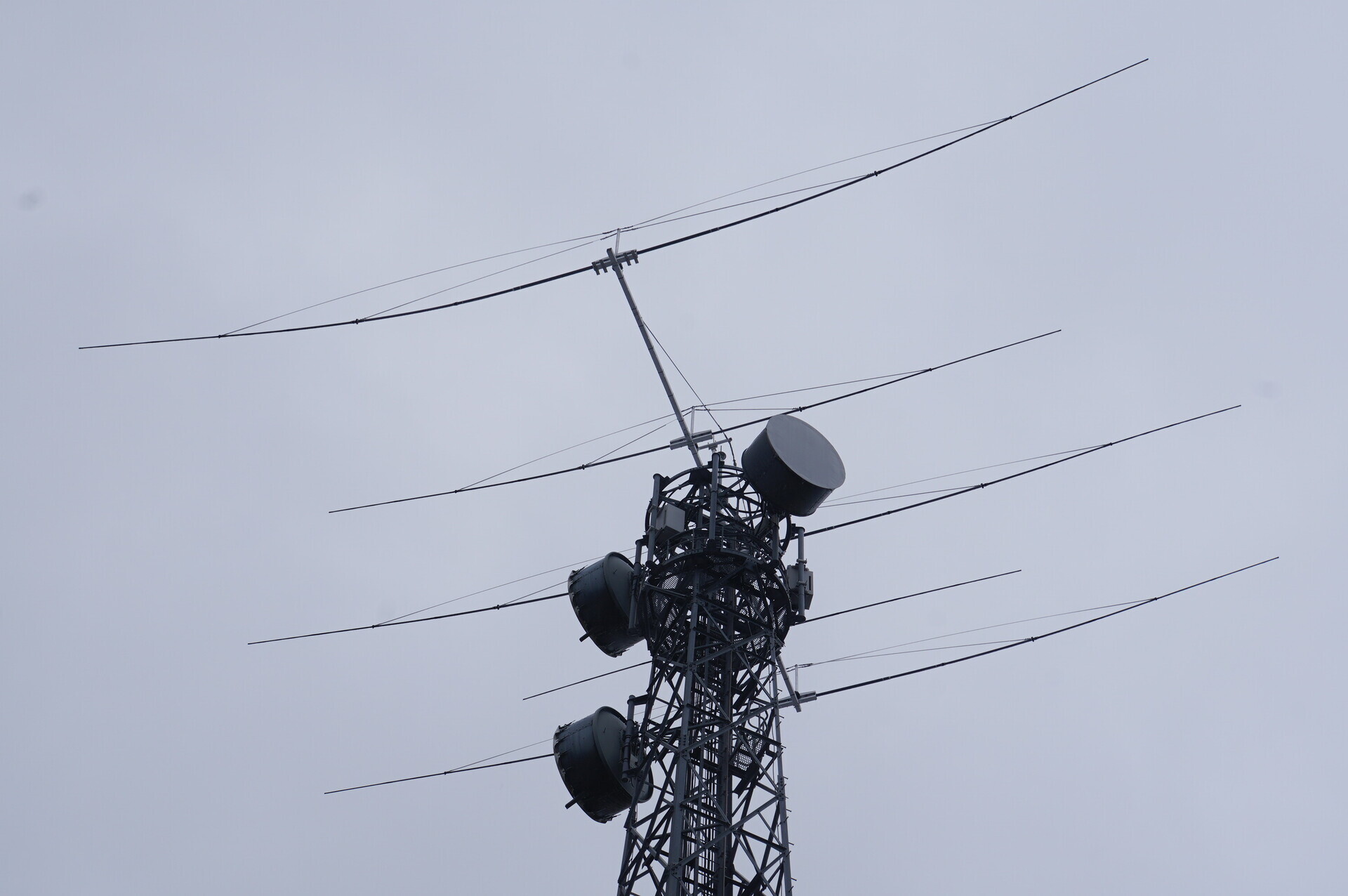
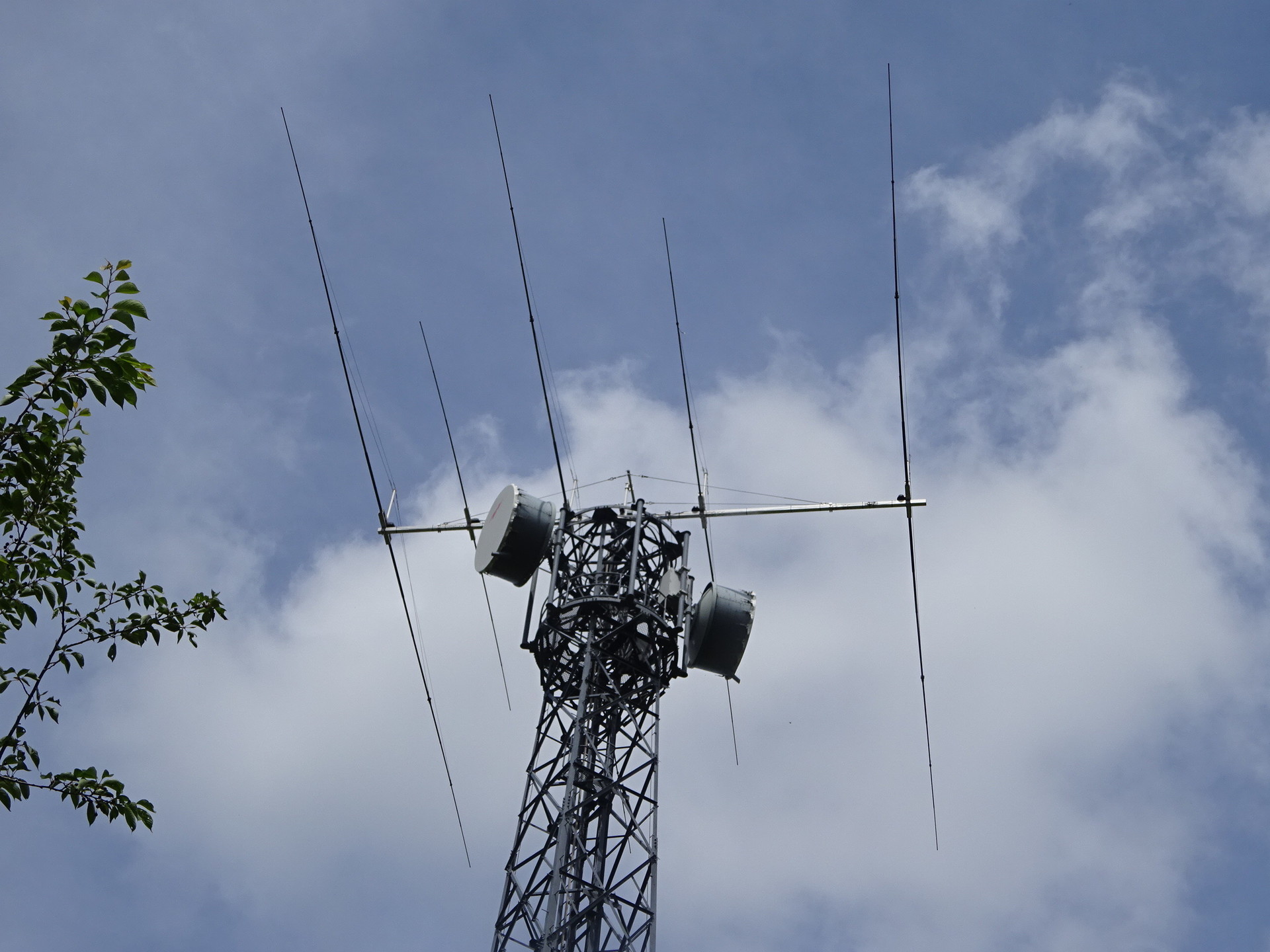
One tower, one five-element SteppIR HFT540C Yagi. The HF array sits above the dishes on McKay’s established microwave tower, beside the former Kazusa Resort hotel.
The same tower connects toward Marusada Ariake / Tokyo, Cosmo East / Maruyama CLS, and now Inzai. Adding the HF antenna puts the transmitter directly on that network.
Declared overseas receivers
Singapore
1.33667, 103.89389 ↗Hong Kong
22.30750, 114.29389 ↗Both paths appeared in BR IFIC on 5 August 2025, before the photographed HF build. Ryota read the Yagi’s west-southwest bearing in February as pointing toward Singapore.
ITU chronology and receiver coordinates · Mounted antenna and bearing ↗ · English
Ryota’s August 2026 summary still reports no full Japanese HF licence or public callsign for Kanozan.
HF build · winter 2025–26
30 Nov – 13 Dec 2025
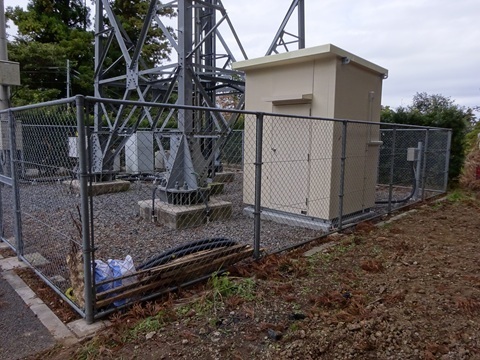
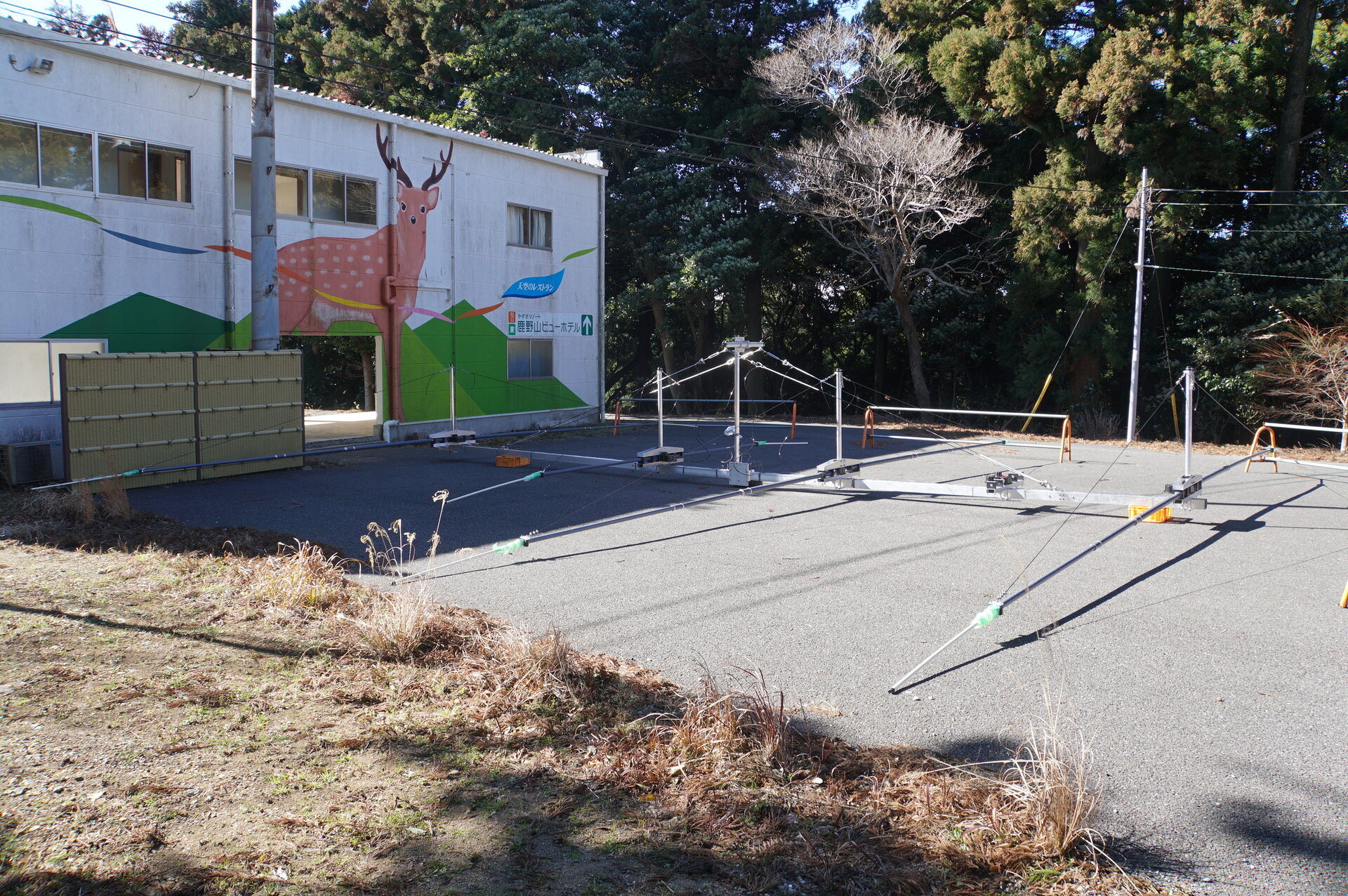
Nuda · HF receiver
35.252539, 140.108030 ↗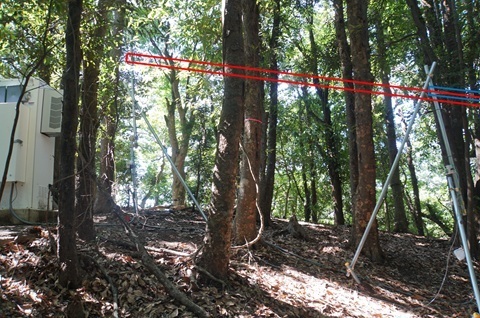
Two approximately 90 m Beverage wires, about 2 m above ground, running roughly north-northeast. They are less than 1 m apart—about 60 cm at the crossbar—and staggered 5 m along their length.
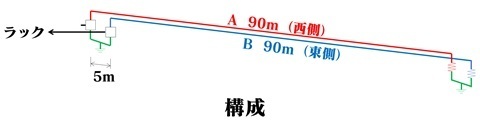
Only wire B was connected on 21 September 2025
The feed boxes are labelled for an end-fire phased Beverage system. At this visit, the western wire A’s receiver port was capped; the eastern wire B had coax attached.
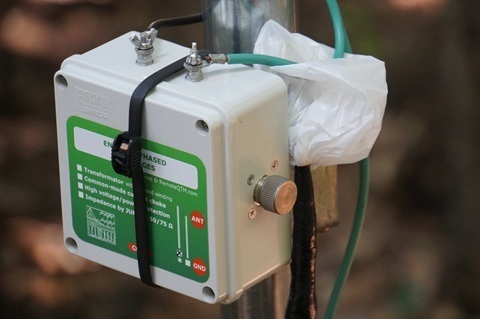
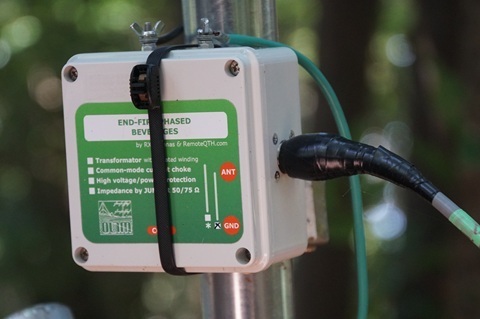
Ryota saw no backhaul connection and suggested the site might be recording locally. Its onward connection remains unidentified in his later network diagrams.
Nuda fieldwork ↗ · English · August 2026 network overview ↗ · English
Tokyo, Maruyama and Inzai
Open the network map →Maruyama CLS ↔ Cosmo East ↔ Kanozan ↔ Marusada Ariake ↔ Shin-Toyosu Cube / CC2
This is the existing route through Kanozan. The Ariake rooftop provides the final hop into Shin-Toyosu Cube; the southern arm connects the HF tower to Maruyama’s cable landing.
Southern network ↗ · English · Shin-Toyosu dish assignments ↗ · English
Cosmo East · McKay also carries Raft’s backhaul
Raft’s JS2SA Yagi sits above McKay’s two dishes, which point toward Kanozan and Maruyama. Those are the tower’s only microwave dishes, and 4HF has no fixed-microwave or E-band licences in Ryota’s table. Together, this indicates that McKay transports Raft’s HF traffic.
Raft uses the same HFT540C antenna model as McKay’s later Kanozan installation.
2026 extension · Kanozan ↔ NTT Funaho ↔ SCSK SI1
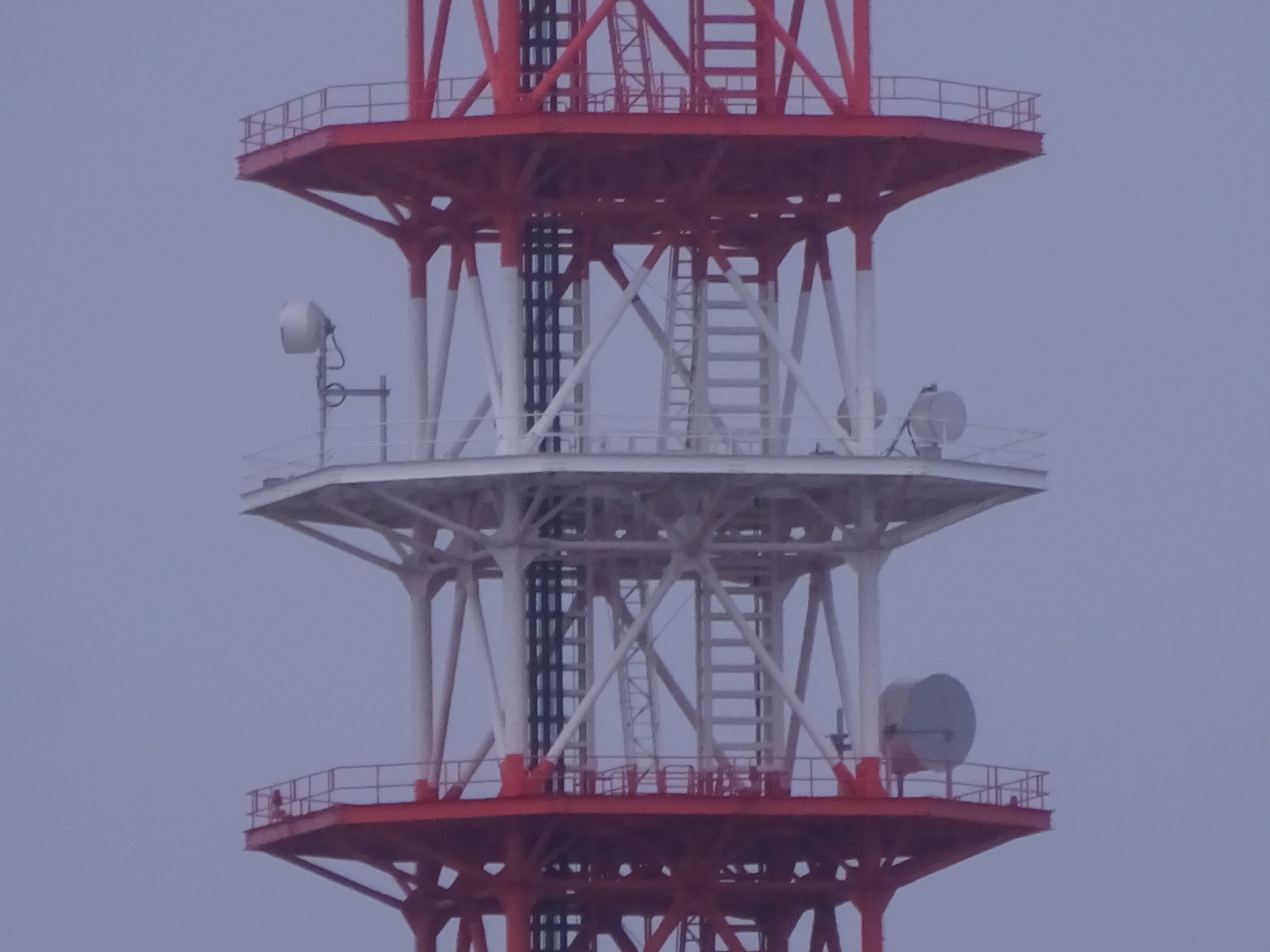
The new branch gives Kanozan a separate route north to Inzai. A 61.8 km hop reaches NTT Funaho’s exchange tower, followed by a short hop to SCSK SI1.
The local Funaho–SI1 dishes were already visible on 28 June 2026. The Kanozan hop was photographed at Funaho on 16 August and at Kanozan on 23 August, including the new pair in the tower overview above.
NLN also reaches SI1, through its own network.
Funaho and SI1 ↗ · English · Kanozan counterparts ↗ · English
West to Ise
CC1 / TEPCO Toyosu ↔ Oyama ↔ Ashitaka ↔ Abe ↔ Joyama / Shiroyama ↔ Tsukude ↔ NTT West Ise Shima
The westbound microwave route uses CC1 as its Tokyo rooftop, separate from the Cube / CC2 connection above. Ryota photographed JOSADA equipment and labels at Oyama and Ashitaka. His corrected November 2024 diagram takes the western end to NTT West’s Ise Shima office in Ise city, replacing the earlier Yokkaichi candidate.
That office is at 5-1 Ichishicho, Ise. It is a different location from the Shima cable landing stations shown on the map. Our MIC licence analysis also supports the western hops through Shizuoka Aoi, Shinshiro, Okazaki and Ise.
Oyama ↗ · English · Ashitaka ↗ · English · Corrected route ↗ · English · MIC analysis